Valorant Beginner and Intermediate Guide: Learn Your Agent, Control Your Aim, and Win More Rounds
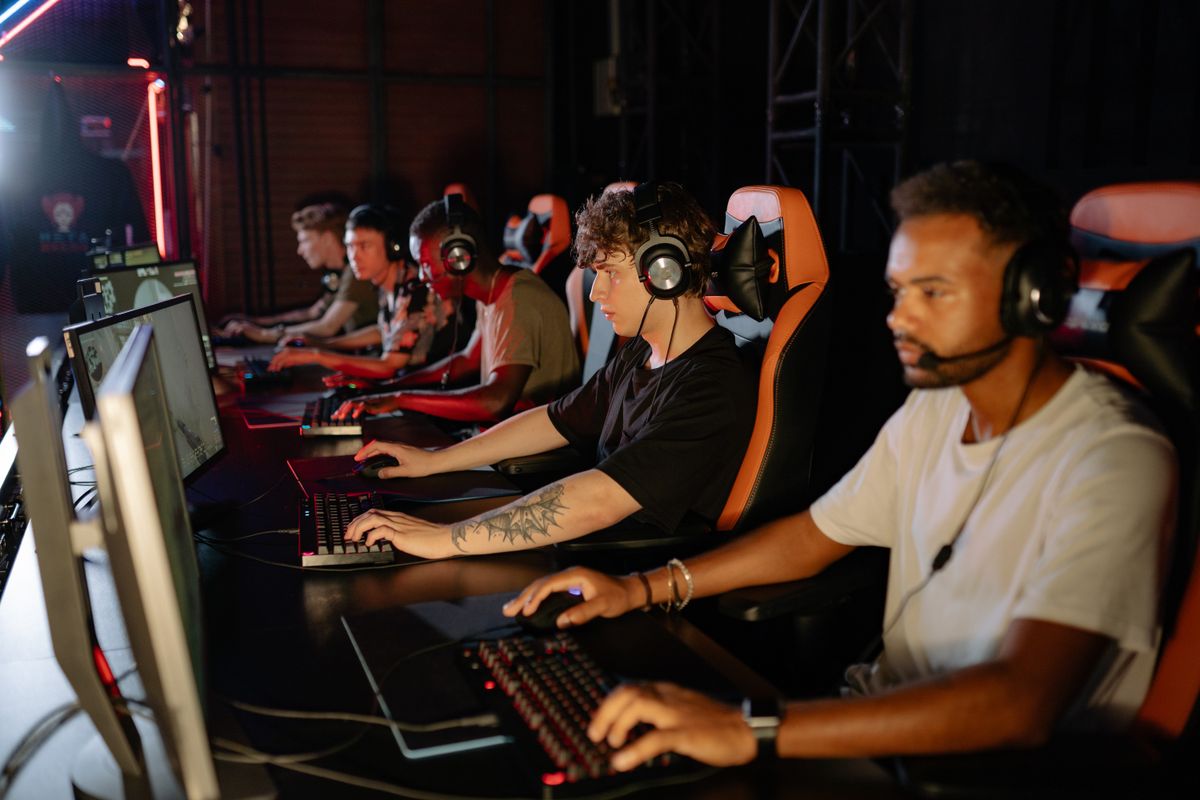
Photo by Yan Krukau on Pexels (Pexels photo ID 9072212). This is a free stock illustration of competitive gaming, not actual Valorant gameplay footage.
Valorant can look simple from the outside: two teams of five, one objective, and a timer ticking down. In practice, it is a game of small decisions made under pressure. Where you stand, when you use an ability, whether you save money for the next round, and how clearly you speak to your team all matter as much as raw aim. The good news is that none of those skills require talent you either have or do not have. They can be learned, one habit at a time, and that is exactly what this guide is for.
Riot Games describes Valorant as a five-versus-five tactical shooter in which every player chooses one Agent with unique abilities. One team attacks and tries to plant the Spike, while the other defends and tries to stop that plant or defuse it. The teams swap sides after twelve rounds, so a match asks you to think from both directions: how to break a site open, and how to hold one closed. That structure is the key to improving. If you understand what each round is asking of you, the rest of your decisions start to fall into place.
1. Start by understanding the round, not just the gunfight
Many new players treat every round as a hunt for kills. Experienced players treat it as a job with a deadline. Attackers need a plan for entering a site, planting the Spike, and then holding the area after the plant. Defenders need a plan for watching the most likely entrances, delaying the attack, and retaking together if the Spike goes down. Kills help both plans, but they are not the plan itself.
Before a round begins, ask yourself a simple question: what is my job right now? If you are attacking, your job might be to clear a corner, create space with an ability, or watch the flank so your teammates can plant safely. If you are defending, your job might be to hold one angle, gather information without dying early, or stay alive long enough for help to arrive. When every player has a job, a team stops wandering and starts working together, even without perfect aim.
Time is also a resource. Attackers who move too slowly give defenders time to rotate and set up. Attackers who rush without checking corners give defenders free kills. The middle path is deliberate: move with purpose, clear angles in order, and do not waste the first half of the round standing still. If the Spike is planted, the clock changes again, and the team that plays the post-plant calmly usually wins.
2. Learn one Agent properly before trying them all
Valorant offers a roster of Agents, and it is tempting to switch every match. Resist that urge at first. Pick one Agent whose abilities feel natural to you, learn what each ability does, and learn where it is most useful. Does it reveal enemies, block vision, slow a push, heal a teammate, or create space? Knowing the answer in advance stops you from wasting abilities in panic.
Once you know one Agent well, you also start to understand your teammates better. You will notice when an ability opens a path for you, when a teammate needs you to hold a different angle, and when your own ability can rescue a round that is going wrong. That awareness is worth more than a shallow knowledge of ten Agents. You can always expand your pool later, but depth first makes every later Agent easier to learn, because you already understand timing, positioning, and team roles.
Pay attention to the basics the official guide highlights: your Agent is not just a set of buttons, but a role in a team. Some Agents are better at leading an entry, others at gathering information or supporting a push. Choose your Agent to fit what your team needs, not only what looks exciting in a highlight clip.
3. Build aim on fundamentals, not flicks
Highlight reels reward fast flicks, but most rounds are won by steady, boring aim. Keep your crosshair at head height and pointed where an enemy is likely to appear, rather than at the floor or the sky. When you move around a corner, move in small steps and stop briefly before shooting, because accuracy in Valorant rewards a stable stance. Spraying while running looks busy, but it rarely wins duels against a player who is standing still and aiming carefully.
Use a sensitivity and crosshair setup that feels comfortable, then leave it alone for a while. Constantly changing settings makes it impossible to build muscle memory. The official guide discusses settings for a reason: a clear crosshair, sensible sensitivity, and a setup you do not have to think about let you focus on the game instead of your mouse. Spend a few minutes warming up before competitive matches, practise short bursts rather than long sprays at distance, and accept that missing is part of learning. The goal is not to never miss, but to miss less often in the situations that matter.
4. Treat money as a team decision
Valorant has an economy, and it shapes every round. Strong weapons cost more, abilities cost money, and armour changes how much damage you can survive. If you buy the most expensive weapon every round without thinking, you may be broke at the exact moment your team needs a full buy. If you save together on a weak round, your team can return with proper weapons and a real chance to win the next one.
The simplest rule for beginners is to follow your team. If most teammates are saving, save with them. If the team agrees on a full buy, buy what fits your role and keep enough for essential abilities. Do not buy alone, do not force a purchase that leaves you with no armour, and do not judge a round only by whether you personally had a good weapon. A coordinated save is not giving up; it is planning for the round after.
Read Also:
- Fortnite Tips for Beginners in 2026: Land Smart, Rotate Early, Win More Fights
- Apex Legends Tips and Tricks: How to Survive Longer, Fight Smarter, and Climb in the Prodigy Era
5. Use sound, maps, and patience as information
Valorant rewards players who listen. Footsteps, ability sounds, reloads, and the Spike plant all tell a story about where enemies are and what they intend to do. Wearing headphones and keeping game sound clear helps you react before you see an opponent. Equally important is learning the maps. The official guide notes that there were eleven maps when it was written, and each one has its own entrances, choke points, and hiding spots. You do not need to memorise every corner on day one, but learning one map at a time, including its common angles and rotation routes, will make your decisions faster and calmer.
Patience is a skill too. Holding an angle quietly can be more valuable than pushing for a kill and giving away your position. If you hear several enemies on one side of the map, tell your team and consider rotating, rather than fighting alone. If you are the last player alive, think about what is still possible: can you save your weapon, can you delay, or is there a realistic chance to win the round? Playing the situation, rather than your frustration, is what separates improving players from stuck ones.
6. Communicate early, briefly, and kindly
Communication is one of the most underrated skills in Valorant, and the official guide gives it real attention. A short call such as an enemy location, a low-health warning, or a plan for the next round can change an outcome. Long, emotional messages cannot. Keep calls short, specific, and calm: where, how many, and what you need. Instead of saying that everything is going wrong, say what should happen next.
Communication also includes listening. If a teammate calls a rotation, consider it before arguing. If someone asks for an ability or a weapon drop, help when you can. Teams that stay positive after losing a round recover faster than teams that blame each other. You do not need a microphone to be useful either; clear pings, sensible positioning, and following the team plan all communicate intent. The best teams are not always the loudest, but they are usually the clearest.
7. Practise with a purpose, then review one mistake
Improvement does not come from playing more matches in exactly the same way. It comes from focused practice and honest review. Choose one thing to work on for a session: crosshair placement, ability timing, economy discipline, or communication. Play a few matches with that focus, then ask yourself what went wrong in one round. Was it positioning, a wasted ability, a bad buy, or a missed call? Fixing one recurring mistake is more effective than trying to fix everything at once.
Use the game's different modes to your advantage. Lower-pressure modes are good for learning maps, testing Agents, and practising aim without the stress of ranked consequences. Competitive matches are where you test whether those habits hold under pressure. Keep sessions manageable, take breaks when frustration rises, and remember that progress in a tactical shooter is often slow and then sudden: a habit clicks, and rounds that once felt chaotic start to feel readable.
Common beginner mistakes to avoid
First, do not reload in the open after every shot; find cover first. Second, do not chase a kill through a doorway alone when your team is not ready. Third, do not waste every ability at the start of a round; save at least one for the moment it matters most. Fourth, do not stand in the same spot every round, because good opponents will learn your habit and punish it. Finally, do not measure yourself only by kills. A player who plants safely, holds a flank, trades a teammate, or gives a perfect call can win a round without topping the scoreboard.
Valorant rewards patience, preparation, and teamwork more than flashy moments. Learn your Agent, respect the economy, aim with discipline, listen to the map, and speak clearly to your team. Do those things consistently, and you will not just play more rounds, you will understand them. That understanding is the real difference between a beginner who hopes for a good match and an intermediate player who can help create one.
Source: Riot Games — Beginner’s Guide
